Outer Wilds and the Fragility of Knowledge: When Progress Exists Only in Memory
Introduction
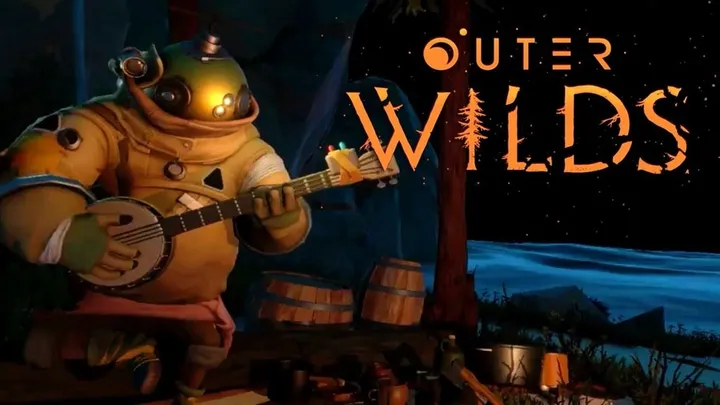
Outer Wilds is widely praised as one of the most innovative exploration games ever created. Developed by Mobius Digital and published by Annapurna Interactive, it rejects traditional progression systems in favor of a radical idea: the only thing you permanently gain is knowledge.
There are no skill trees. No stronger weapons. No upgraded tools. Every 22 minutes, the universe resets. Planets collapse. Structures crumble. The sun explodes. And you wake up exactly where you started.
This design decision is brilliant — but it also introduces a specific structural issue: when progress exists only in memory, player agency becomes fragile, uneven, and psychologically exhausting. What begins as empowering discovery gradually risks becoming cognitive overload. This article explores how Outer Wilds’ knowledge-based progression transforms over time — from wonder to strain — and whether that transformation strengthens or weakens the experience.
The First Loop: Wonder Without Context
A Solar System That Feels Alive
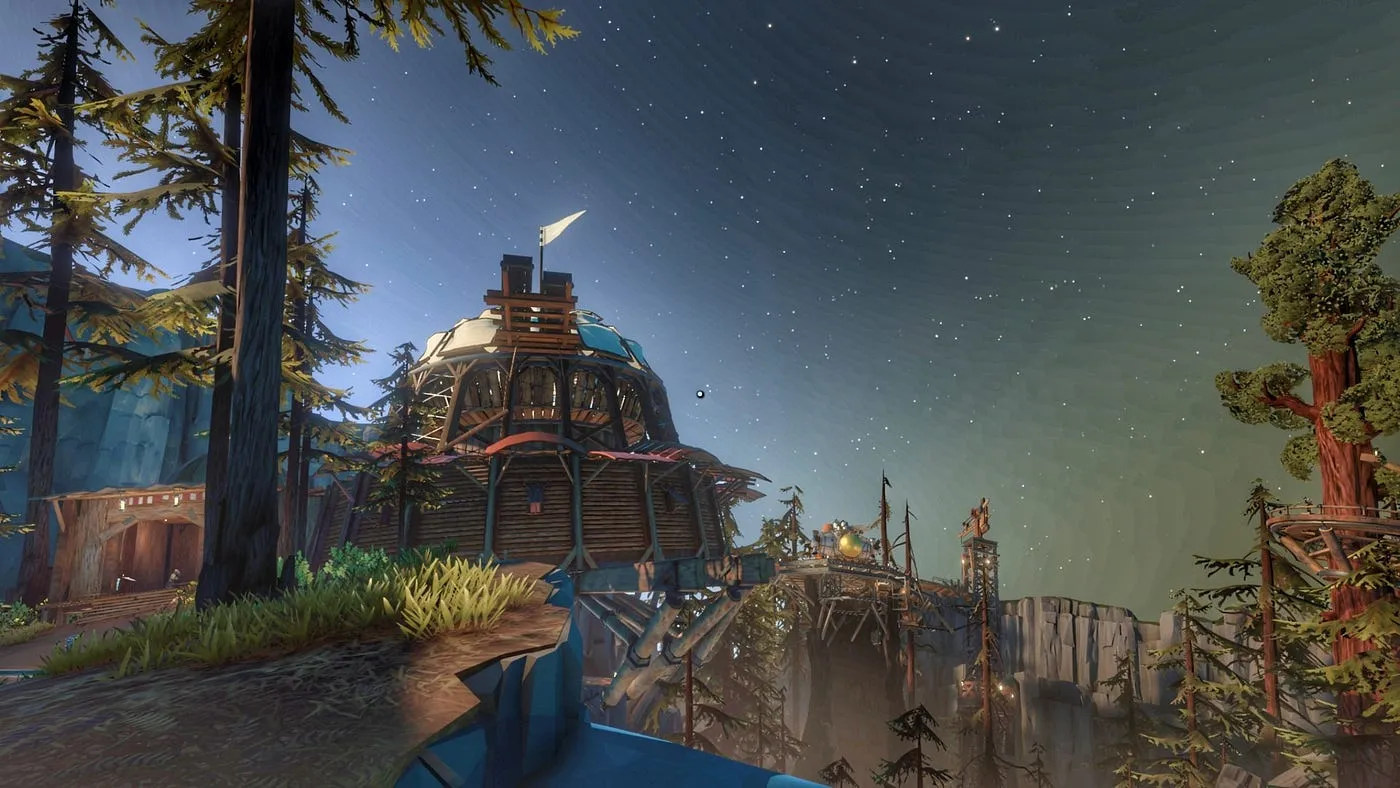
The opening loop is magical. You launch into space with no clear objective beyond curiosity. Every planet behaves differently. Gravity bends unpredictably. Sand flows between worlds.
There is no map marker telling you what to do.
This absence of instruction feels liberating.
Death Without Punishment
You fall into a black hole. You suffocate in space. You get crushed by rising sand.
Then the sun explodes.
And you wake up.
At first, the reset feels forgiving. There is no loss of items. No penalty. The loop seems generous.
The system appears kind.
Early Discovery: Knowledge as Reward
The Ship Log as Anchor
The ship’s rumor log tracks discovered information. It becomes the only external structure holding your progress together.
Without it, memory alone would be overwhelming.
The log reassures you: progress is happening.
Curiosity-Driven Navigation
You chase unanswered questions:
- Why is the moon quantum?
- What happened to the Nomai?
- Why does the sun explode?
Each answer reveals more questions.
The structure feels infinite, yet manageable.
The Midgame Shift: Information Density Increases
Threads Begin Intersecting
As discoveries accumulate, connections form across planets. Clues found on one world unlock paths on another.
This cross-planet dependency increases cognitive load.
You are no longer exploring randomly. You are juggling hypotheses.
The Cost of Forgetting
If you misremember a detail, you may waste an entire loop chasing the wrong lead.
Because there is no mechanical progression, incorrect interpretation equals lost time.
Knowledge is fragile.
Time Loop as Constraint
22 Minutes Is Not Long
Certain locations require long travel times or precise timing windows.
Reaching the Ash Twin Project or navigating Brittle Hollow’s collapse demands near-perfect execution.
Failure resets everything.
Repetition Without Variation
You must relaunch, refly, and retrace steps repeatedly.
Even though knowledge persists, physical actions repeat identically.
This creates friction between intellectual progress and mechanical repetition.
The Fragility of Player Memory
The Game Assumes Attention
Outer Wilds assumes players will:
- Read every text log
- Interpret environmental clues
- Retain spatial details
- Connect abstract concepts
For many players, this is exhilarating.
For others, it is overwhelming.
No Skill Buffer
In most games, mechanical mastery can compensate for narrative confusion.
Here, misunderstanding the lore blocks progression entirely.
There is no grinding alternative.
The Ash Twin Problem
Precision as Barrier
One of the game’s most notorious challenges involves entering the Ash Twin Project.
The solution requires exact timing and environmental awareness.
Many players understand the theory but fail execution repeatedly.
Knowledge vs. Implementation
You may know exactly what to do — yet still fail due to minor miscalculations.
This reveals a tension:
Is the obstacle intellectual, or mechanical?
Late-Game Pressure: Convergence of Clues
Everything Connects
As you approach the ending, every mystery converges toward a single path.
The narrative coherence is brilliant.
But the stakes increase.
Mistakes Feel Heavier
Because the solution requires multiple precise steps across planets, one small error forces a full loop reset.
The final act amplifies fragility.
Emotional Consequences of Reset-Based Design
Success Is Mental, Not Mechanical
When you solve a mystery, the reward is understanding — not power.
This creates profound satisfaction.
But it also means there is no tangible reinforcement beyond personal insight.
Burnout Risk
Repeated resets combined with high cognitive demand can exhaust players.
Some stop not because they are stuck — but because they are tired.
The Illusion of Total Freedom
You Can Go Anywhere — But Not Anytime
Technically, every planet is accessible from the start.
Practically, knowledge gates you.
Until you understand quantum rules or sand cycles, areas remain inaccessible.
Soft Locks Through Ignorance
The game does not lock doors.
It lets confusion function as the lock.
This is elegant — but unforgiving.
Why the Design Still Works
Thematic Consistency
The fragility of knowledge mirrors the game’s themes of impermanence and cosmic insignificance.
The collapsing universe reflects the collapsing certainty of the player.
Emotional Payoff
When understanding finally crystallizes, the impact is profound.
Few games make learning itself feel heroic.
Lessons for Knowledge-Based Design
Cognitive Load Must Be Managed
Pure knowledge progression is risky.
Players vary in memory, deduction skill, and patience.
Repetition Must Feel Purposeful
Reset loops work best when mechanical repetition is minimized.
Outer Wilds sometimes pushes that boundary.
Conclusion
Outer Wilds is a masterpiece built on a daring foundation: progress without permanence. By removing upgrades and replacing them with understanding, it transforms knowledge into the ultimate resource.
Yet this brilliance introduces fragility. Progress depends entirely on memory, interpretation, and flawless execution within strict time limits. When understanding falters, nothing else compensates. The time loop amplifies both wonder and exhaustion.
Outer Wilds succeeds because it commits fully to its philosophy. But that philosophy demands more from the player than most games dare to ask. In a universe that resets every 22 minutes, your only weapon is comprehension — and comprehension is delicate.
In the end, Outer Wilds proves something rare: knowledge can be both liberation and burden.
160-character summary
Outer Wilds makes knowledge the only form of progress, but time loops and cognitive pressure turn discovery into fragile, mentally demanding gameplay.