


Roblox: The Forge – Full Breakdown & In-Depth Analysis of the Rising Sandbox-RPG Phenomenon
Introduction
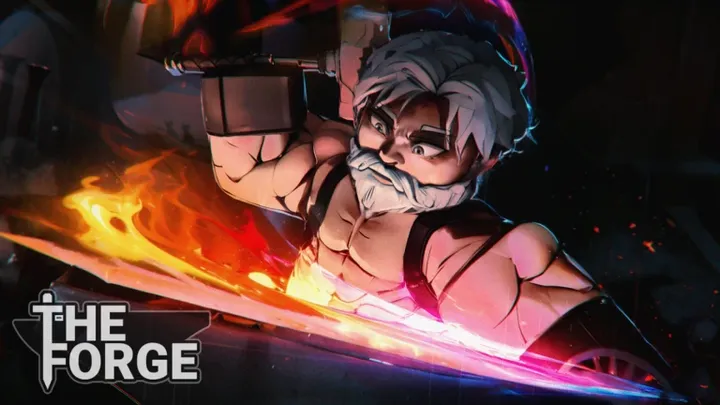
Among the endless sea of experiences inside Roblox, few titles have risen with the momentum, ambition, and craftsmanship demonstrated by The Forge. Blending action-RPG combat, systemic crafting mechanics, fantasy world-building, and open-ended progression, The Forge has quickly evolved from an experimental project into one of the platform’s most promising large-scale games.
This 5,000-word analytical report explores every major dimension of Roblox: The Forge: its gameplay loops, world design, combat systems, power curves, progression economy, social dynamics, meta-structure, monetization, technical execution, and future potential. The goal is to provide a complete, newsroom-style critical overview suitable for readers, developers, and industry observers who want to understand what makes The Forge work—and where it might go next.
1. Background & Development Overview
1.1 Origins of The Forge
The Forge emerged during the platform’s rise in “premium-quality” games—titles that feel closer to full, standalone RPGs rather than casual minigames. Developed by a small but growing Roblox studio, The Forge emphasizes:
Narrative-light but system-rich design
Persistent progression
Combat depth beyond typical Roblox action games
A flexible build-and-craft identity
The development philosophy borrows heavily from mainstream RPGs such as Dark Souls, Dragon’s Dogma, Monster Hunter, and Elden Ring, while adapting those influences into Roblox’s accessible aesthetic.
1.2 Roblox as a Platform for High-Scale RPGs
Roblox has evolved from a sandbox engine for children into a significant creator-driven ecosystem, rivaling indie game marketplaces. Games like Deepwoken, Arcane Odyssey, and Blade Ball have set new standards for combat quality, narrative ambition, and production.
The Forge follows this modern wave by:
Prioritizing skill-based combat
Using advanced Lua scripting for animation blending
Implementing layered item progression systems
Building a semi-open world with diverse biomes
Delivering consistent content updates
2. Core Gameplay Mechanics
2.1 The Primary Gameplay Loop
At its heart, The Forge operates on a “risk, reward, upgrade, repeat” loop:
Explore dangerous zones
Fight monsters, bandits, and bosses
Collect resources, materials, and rare drops
Forge improved weapons, armor, and tools
Unlock new abilities and paths
Advance into even tougher regions
This cyclic structure encourages constant engagement and progression without forcing players into narrative rails. Players always feel “one upgrade away” from becoming significantly stronger.
2.2 Movement & Traversal
Movement is responsive and precise. Techniques include:
Sprinting and stamina management
Dodge rolls
Jump-based mobility
Environmental climbing (varies by zone)

Some zones include platforming, environmental traps, and vertical exploration, improving pacing variety.
2.3 Combat System Breakdown
Combat in The Forge is more tactical—and more punishing—than typical Roblox action games.
2.3.1 Light vs Heavy Attacks
Players juggle:
Light attacks: Faster, better for combos
Heavy attacks: Slow, high-risk burst damage
Both consume stamina, forcing players to think before spamming.
2.3.2 Blocking & Parrying
One defining feature is its parry timing system:
Successful parries create counterattack windows
Blocks reduce incoming damage but drain stamina
Perfect guards can interrupt boss attacks
This elevates the skill ceiling dramatically.
2.3.3 Weapons Variety
Weapon archetypes include:
Swords
Greatswords
Spears
Daggers
Hammers
Element-infused variants
Each category features different movesets, reaches, swing speeds, and damage curves.
2.3.4 Enemy AI & Combat Behavior
AI patterns include:
Windup animations
Telegraphed AoE attacks
Ranged projectiles
Multi-phase boss encounters
Bosses in particular feel uniquely handcrafted, featuring adaptive aggression, recovery patterns, and punishing combos.
3. The Crafting & Forging System
3.1 Resource Gathering
Gathering is the backbone of the experience. Resources come from:
Mining ore deposits
Harvesting plants
Killing monsters for drops
Completing events
Scavenging ruins
Each biome offers unique materials, promoting exploration.
3.2 The Forge Workstations
Progression relies on unlocking advanced forge tiers:
Basic forge: Early weapons + tools
Intermediate forge: Elemental enhancements
Master forge: End-game gear, exotic infusions
These upgrades require rare boss-level materials.
3.3 Gear Stat Scaling
Weapons include:
Base damage
Elemental bonuses
Durability
Crit chance
Attack speed
Weight (affects stamina cost)
Armor contributes:
Defense
Resistance types (fire, frost, corruption)
Mobility weight class
Set bonuses
Forge customization allows every player to craft a personalized build identity.
4. The World of The Forge
4.1 World Structure & Biomes
The world is divided into semi-open, interconnected regions:
The Ember Highlands: Lava plains, fire spirits
Frostreach Tundra: Ice caverns, slow-tech enemies
Verdant Wildgrove: Forest beasts, plant-based crafting
Ruined Bastion: Fallen fortress with undead knights
The Shattered Depths: Late-game corruption biome
Each biome introduces unique threats, materials, bosses, and environmental hazards.
4.2 Environmental Storytelling
Instead of lengthy lore dialogue, The Forge uses:
Ruins
Totem structures
Monster designs
Item descriptions
Ambient music
This “soft lore” approach allows the world to feel ancient without overwhelming players with text.
4.3 Hidden Secrets & Exploration Incentives
Exploration rewards:
Hidden crafting blueprints
Puzzle-locked chests
Elite minibosses
Shortcuts and traversal paths
World-specific cosmetics
Secrets greatly extend replayability.
5. Character Progression & Builds
5.1 Leveling Structure
Progression combines:
Player level
Weapon mastery
Armor tiers
Skill unlocks
Instead of stat dumping, players improve primarily through equipment quality, similar to Souls-like design.
5.2 Skills & Perks
Skill trees vary by combat style:
Light weapon specialization
Heavy weapon specialization
Elemental combat
Defensive/parry builds
Utility skills (movement, stamina, crafting perks)
Players can reset builds, encouraging experimentation.
5.3 Build Archetype Examples
Glass Cannon: Light armor, high crit, fast weapons
Tank: Heavy armor, block build, high stability
Elementalist: Fire or frost-infused gear
Hunter: Ranged tools, mobility focus
Bruiser: High HP, mid-range weapons, stagger mechanics