Chef Life: A Restaurant Simulator – The Precision and Pressure of Culinary Management

Introduction
Chef Life: A Restaurant Simulator, developed by Cyanide Studio and published by Nacon, is a management simulation that explores the realities of running a professional kitchen. Rather than presenting cooking as a casual or purely creative activity, the game focuses on discipline, timing, and operational efficiency.
Set within a fully customizable restaurant, players take on the role of a head chef responsible not only for preparing dishes but also for designing menus, managing staff, sourcing ingredients, and maintaining service quality. The experience is structured around the idea that cooking is not an isolated act but part of a larger system where every decision affects the final outcome.
1. The Kitchen as a System of Coordination
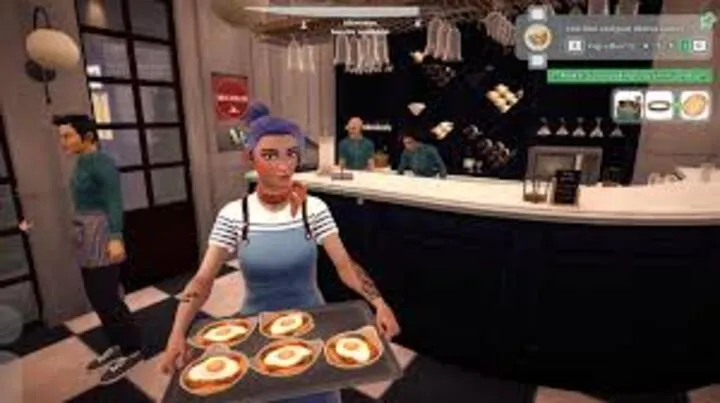
In Chef Life, the kitchen is not just a workspace but a coordinated system where multiple processes occur simultaneously. Cooking is broken down into precise steps that must be executed in the correct order and at the right time.
Each dish requires attention to preparation, cooking temperature, plating, and timing. While a single recipe may seem simple, the challenge emerges when several orders must be completed at once. The player must constantly shift focus, balancing multiple tasks without allowing any one element to fail.
This design transforms cooking into a form of real-time management, where success depends on maintaining control under pressure rather than simply following instructions.
2. Menu Creation and Culinary Identity
A central feature of the game is the ability to design a restaurant’s menu. Players select dishes that define the identity of their establishment, whether focusing on traditional cuisine or modern interpretations.
Menu creation is not purely aesthetic. Each dish influences customer expectations, preparation complexity, and ingredient requirements. A menu filled with elaborate recipes may attract more attention but also increases the difficulty of service.
Over time, players refine their menu to balance creativity with practicality. The restaurant becomes a reflection of strategic choices rather than random selection.
3. Ingredient Sourcing and Resource Management
Behind every dish lies a system of resource management. Ingredients must be sourced, stocked, and used efficiently.
The game emphasizes freshness and quality, requiring players to maintain a steady supply of necessary items. Running out of key ingredients during service can disrupt operations and reduce customer satisfaction.
This layer of management introduces long-term planning. Players must anticipate demand, control costs, and ensure that their kitchen is always prepared for service.
4. The Pressure of Real-Time Service
Service periods represent the most intense part of the gameplay. Orders arrive continuously, and the player must respond quickly while maintaining accuracy.
Each dish must be prepared within a limited time frame. Delays or mistakes affect customer satisfaction and the restaurant’s reputation. As more customers arrive, the pace increases, turning the kitchen into a high-pressure environment.
This structure captures the reality of professional kitchens, where timing is critical and small errors can have significant consequences.
5. Staff Management and Delegation
As the restaurant grows, players gain access to additional staff members. Managing this team becomes essential for handling increased demand.
Staff members can be assigned to specific roles within the kitchen, allowing the player to focus on key tasks. However, delegation introduces new challenges. Poor coordination or inefficient assignments can slow down service rather than improve it.
The player must learn to trust and manage their team, balancing control with efficiency. This reflects the leadership role of a head chef rather than a solo cook.

6. Skill Development and Recipe Mastery
Progression in Chef Life is tied to skill development. As players continue cooking, they become more efficient and unlock new recipes.
Mastering a dish involves understanding its timing and execution rather than memorizing steps. Repetition leads to smoother performance, reducing the likelihood of mistakes during busy service periods.
This system encourages players to refine their techniques, reinforcing the idea that expertise is built over time.
7. Restaurant Customization and Atmosphere
Beyond the kitchen, players can customize the appearance of their restaurant. Interior design choices influence customer perception and overall atmosphere.
Elements such as furniture, layout, and decoration contribute to the dining experience. While these features do not directly affect cooking mechanics, they play a role in building a cohesive identity for the restaurant.
This aspect connects visual design with gameplay, showing that presentation extends beyond the plate.
8. Customer Satisfaction and Reputation Systems
Customer feedback plays a central role in progression. Each service period results in ratings based on speed, accuracy, and overall experience.
High satisfaction leads to increased reputation, attracting more customers and unlocking new opportunities. Poor performance, on the other hand, can slow progress and limit growth.
This system reinforces the importance of consistency. Success is not defined by a single perfect dish but by maintaining quality across every service.

9. The Balance Between Creativity and Efficiency
One of the game’s most interesting aspects is the tension between creativity and efficiency. Players are encouraged to experiment with menus and presentation, but practical limitations must always be considered.
A highly creative dish may be difficult to execute under time pressure. Conversely, a simple menu may lack appeal. The challenge lies in finding a balance that allows both expression and reliability.
This dynamic reflects real-world culinary management, where innovation must coexist with operational constraints.
10. A Realistic Interpretation of Culinary Work
Chef Life distinguishes itself by presenting cooking as a structured and demanding profession. It avoids exaggeration and instead focuses on the daily realities of running a restaurant.
The game highlights the importance of planning, coordination, and discipline. Every system, from ingredient management to staff coordination, contributes to a broader simulation of the culinary industry.
Rather than offering instant gratification, it rewards patience and improvement, making success feel earned.

Conclusion
Chef Life: A Restaurant Simulator provides a detailed and realistic portrayal of managing a professional kitchen. By combining cooking mechanics with resource management, staff coordination, and customer satisfaction systems, the game creates a layered experience that goes beyond simple simulation. Players must navigate the challenges of time pressure, strategic planning, and creative decision-making, gradually transforming a small restaurant into a successful establishment. The game’s emphasis on precision and consistency reflects the true nature of culinary work, offering an experience that is both challenging and rewarding.