.webp) linkgameh5.com
linkgameh5.comHow to Master Waterpark Simulator: A Complete Guide to Building, Managing, and Expanding Your Waterpark
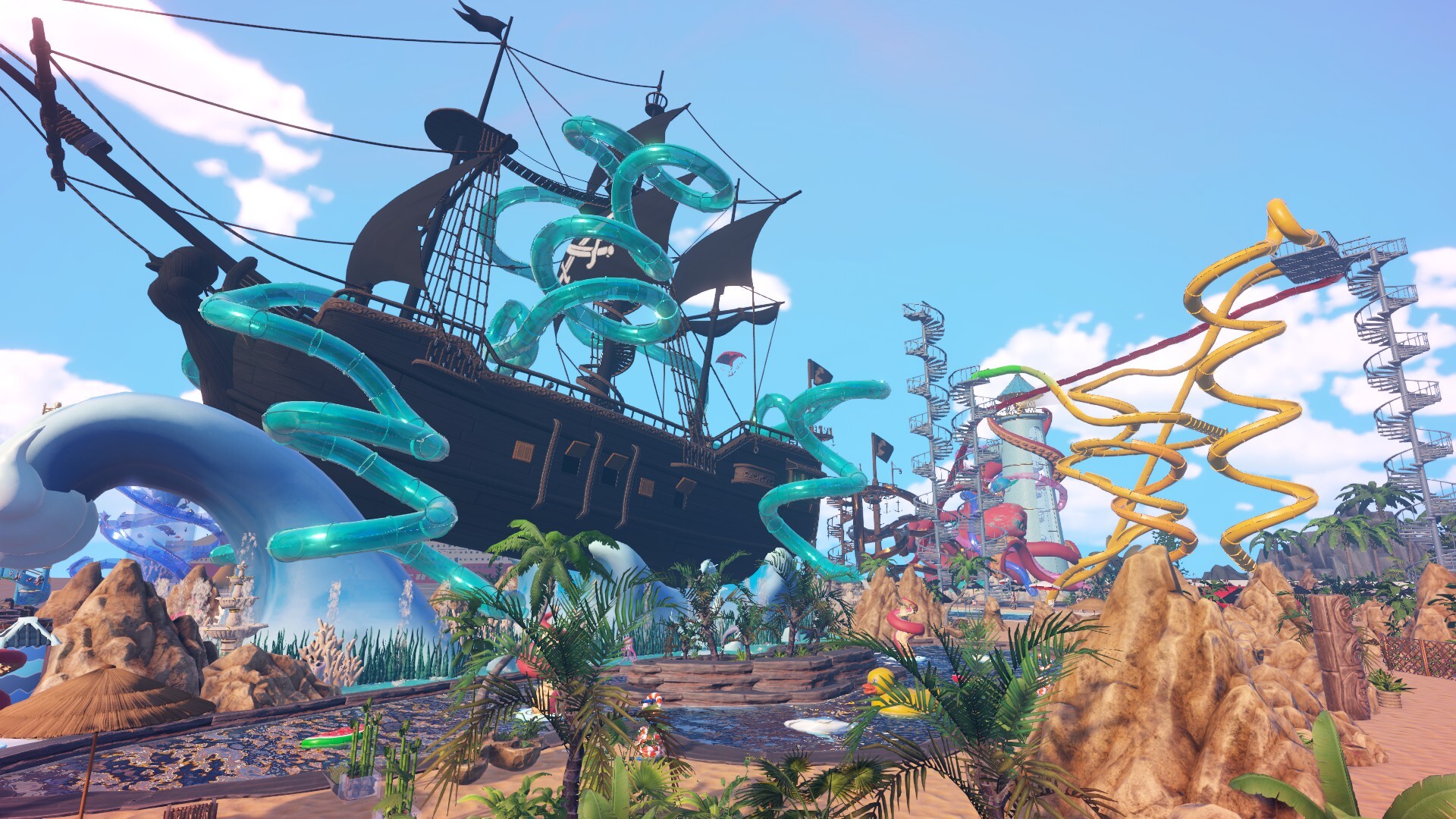
Waterpark Simulator puts you in charge of a growing waterpark where success depends on much more than simply placing exciting attractions. You have to create a park that visitors actually want to use, keep facilities clean, maintain equipment, manage money, and continuously improve the experience. At the beginning, your waterpark may feel small and underdeveloped, but careful decisions can gradually transform it into a busy destination filled with slides, pools, guests, and profitable facilities.
The most important lesson for new players is that a successful waterpark is built through steady progression rather than uncontrolled expansion. Spending all your money on expensive attractions can leave you unable to maintain the park, while ignoring cleanliness or customer needs can damage the overall experience. Every improvement should have a purpose, whether it increases capacity, improves satisfaction, creates additional revenue, or makes daily management easier.
This guide explains how to approach Waterpark Simulator from the moment you begin building your park through the later stages of expansion. You will learn how to organize your first facilities, manage visitors, keep the waterpark clean, choose useful attractions, improve staff efficiency, control finances, and create a layout that remains effective as the park becomes larger.
1. How to Start Your Waterpark the Right Way
The first stage of Waterpark Simulator is about establishing a stable foundation. It can be tempting to immediately purchase the most impressive attraction available, but a large slide is not particularly useful if your park lacks basic services. Your first priority should be creating a functional environment where visitors can move around comfortably and access the facilities they expect.
Start by observing the available space before placing major structures. Think about where guests will enter, where they will walk, and where future attractions could be added. Leaving clear paths around your first facilities is important because a layout that works with a few attractions can become difficult to navigate after several expansions.
Focus on Essential Facilities First
Your initial budget should support the basic operation of the park. Depending on what is available in your current progression, prioritize facilities that directly contribute to visitor comfort and daily operations.
Useful early priorities include:
- A reliable entrance area
- Basic water attractions
- Walking paths
- Essential guest facilities
- Cleaning equipment
- Staff-related facilities
- Simple revenue-generating services
Do not fill every available piece of land immediately. Empty space is useful because it gives you flexibility when you unlock larger attractions.
Build Around a Simple Flow
A good beginner layout should make it easy for visitors to move from one area to another. Place popular attractions where guests can reach them without crossing unnecessarily complicated routes. Keep service areas accessible without allowing them to dominate the central recreational space.
<h3>Think About Expansion From Day One</h3>
Your first layout does not need to be perfect. However, it should be expandable. Leave room around major structures for future upgrades, additional attractions, and wider paths.
A useful approach is to create several informal zones:
- Entrance and reception
- Main attraction area
- Relaxation or pool area
- Food and service area
- Future expansion space
This makes the park easier to understand and reduces the amount of rebuilding required later.
2. How to Build an Efficient Waterpark Layout
Once the basic park is operating, layout becomes increasingly important. Visitors should be able to find attractions easily, while you should be able to reach problem areas quickly. A beautiful park can still perform badly if guests spend too much time walking or if important facilities are scattered across the map.
Start by creating logical paths between high-traffic locations. Major attractions should have enough surrounding space to handle visitors without making the entire park feel cramped. When several attractions become popular, avoid creating a single narrow corridor that everyone has to use.
Create Different Activity Zones
Grouping related facilities makes management easier. For example, large slides can form one high-energy section while pools and relaxation facilities occupy another.
This approach provides several benefits:
- Easier navigation
- Better visual organization
- Simpler maintenance
- Easier future expansion
- More logical guest movement
<h3>Protect Your Main Routes</h3>
Paths connecting the entrance to major attractions should remain clear. Avoid placing unnecessary objects in areas that visitors frequently cross.
If a path becomes congested, consider creating an alternative route rather than simply adding more attractions to the same location.
<h4>Leave Space Around Large Attractions</h4>
Large water slides and major structures can dominate an area. Give them enough surrounding space so they do not interfere with other facilities. This also gives you room to modify the attraction later if the game allows additional upgrades or improvements.
A useful rule is to think about the park in terms of movement rather than decoration. Ask yourself where guests are likely to go after entering, after using an attraction, and when looking for another activity. The answers should influence where you place your facilities.
3. How to Manage Guests and Increase Satisfaction
Guest satisfaction is one of the most important indicators of a healthy waterpark. Visitors arrive with expectations, and your job is to make sure those expectations are met. Attractions are important, but they are only one part of the overall experience.
Guests may become unhappy when the park is dirty, when facilities are difficult to reach, when queues become excessive, or when there are not enough useful services. This means that simply adding more slides will not necessarily solve every problem.
Watch What Visitors Need
Pay attention to guest behavior and any available satisfaction indicators. If visitors appear to be spending too much time walking, your layout may need improvement. If they are frequently waiting, you may need more capacity or better attraction distribution.
Important factors to monitor include:
- Attraction availability
- Cleanliness
- Waiting time
- Facility access
- Comfort
- Food and service availability
- Overall park organization
<h3>Balance Popular and Less Popular Attractions</h3>
A strong park should not force every visitor toward one attraction. If one slide becomes extremely popular while other facilities remain empty, consider adding capacity or creating alternative entertainment.
This makes your park more efficient because guests have more choices.
<h4>Use Guest Behavior as Feedback</h4>
Instead of treating negative feedback as a failure, use it as information. If visitors repeatedly encounter the same problem, fix the underlying cause rather than temporarily addressing the symptom.
For example, if guests consistently complain about waiting, adding another attraction may not help if the real problem is poor path design or insufficient capacity at one specific location.
4. How to Keep the Waterpark Clean and Functional
Cleaning is not simply a cosmetic task in a management simulator. A dirty waterpark can negatively affect the visitor experience and make your operation feel increasingly difficult to control. As the number of guests increases, waste and maintenance problems can also become more frequent.
Develop a cleaning routine early rather than waiting until the park becomes visibly messy. Regular maintenance prevents small problems from becoming larger management issues.
Establish a Cleaning Routine
Check the park regularly and deal with dirty areas as soon as possible. High-traffic zones deserve particular attention because they tend to accumulate problems faster.
Prioritize:
- Entrance areas
- Popular attractions
- Food and service areas
- Rest areas
- Frequently used paths
<h3>Use Staff Efficiently</h3>
As your park grows, doing every task yourself becomes inefficient. When staff systems are available, assign employees to jobs that reduce repetitive work and allow you to focus on expansion.
A staff member who consistently handles cleaning can provide more long-term value than constantly purchasing new attractions while the park becomes increasingly dirty.
<h4>Do Not Ignore Maintenance</h4>
Cleanliness and equipment maintenance should be treated as part of the park's operating cost. Budget for them before making major purchases.
A profitable attraction that frequently requires attention can still be worthwhile, but only if you have enough resources to keep it functioning properly.
5. How to Choose and Upgrade Attractions
Attractions are the heart of your waterpark. They are also among the most expensive investments, so choosing them carefully is important. A good attraction should contribute to the park rather than simply looking impressive.
When deciding what to build next, consider the current needs of your visitors. If your park already has several similar attractions, adding another one may provide less value than introducing something different.
Prioritize Attractions That Expand Variety
Variety gives guests more reasons to explore your park.
Try to develop a mixture of:
- Slides
- Pools
- Relaxation areas
- Family-friendly attractions
- Higher-intensity attractions
- Other interactive activities
A diverse park can appeal to different types of visitors.
<h3>Upgrade Existing Attractions Before Overbuilding</h3>
An existing attraction that already receives strong demand can sometimes be a better investment than a completely new structure.
Before building something new, ask:
- Is the current attraction popular?
- Can it be upgraded?
- Is capacity limiting its performance?
- Does it generate enough revenue?
- Are visitors satisfied with it?
If the answer to several of these questions is yes, upgrading may provide a stronger return.
Avoid Attraction Overload
More attractions require more space, cleaning, maintenance, and management. Building too quickly can increase operating pressure without producing enough additional income.
A controlled expansion strategy is usually safer.
6. How to Manage Money and Build a Profitable Park
Financial management determines how quickly your waterpark can grow. It is easy to spend money when a new attraction becomes available, but maintaining a reserve is equally important.
Your income should support both expansion and regular operating costs. If you spend everything on construction, an unexpected expense can slow your progress significantly.
Separate Expansion Money From Operating Money
Whenever possible, maintain enough funds for routine expenses before committing to a major purchase.
Your financial priorities should generally follow this order:
- Keep the park operational
- Maintain cleanliness and facilities
- Improve profitable bottlenecks
- Expand attractions
- Invest in optional improvements
<h3>Invest in High-Value Improvements</h3>
Not every upgrade has the same impact. Look for improvements that either increase revenue or reduce recurring problems.
For example, an upgrade can be particularly valuable if it:
- Increases attraction capacity
- Improves guest satisfaction
- Reduces maintenance pressure
- Improves operational efficiency
- Creates a new revenue opportunity
<h4>Do Not Spend Based on Appearance Alone</h4>
A visually impressive purchase may not necessarily improve your park's performance. Before spending, consider what problem the purchase solves.
If your guests are unhappy because the park is dirty, a new slide will not fix that problem. If queues are too long, decoration will not increase capacity.
Every major purchase should have a clear objective.
7. How to Manage Staff and Daily Operations
As the waterpark grows, management becomes increasingly difficult to handle alone. Staff can take over repetitive responsibilities and allow you to concentrate on strategic decisions.
The most important part of staff management is assigning people where they provide the greatest benefit. A worker who spends most of the day traveling across the entire park may be less effective than one assigned to a smaller zone.
Divide the Park Into Operational Areas
If the game allows flexible staff assignments, create zones based on activity.
For example:
- Entrance zone
- Pool zone
- Slide zone
- Service zone
- Expansion zone
Assign responsibilities accordingly.
<h3>Monitor Staff Workload</h3>
If one employee constantly has too many tasks, the park may eventually develop problems faster than they can be solved. Watch for areas that repeatedly become neglected.
As your guest count increases, staff requirements may also increase.
Automate Repetitive Tasks Where Possible
Automation and delegation are particularly valuable because management games become more complex over time.
The more routine responsibilities you can delegate, the more attention you can dedicate to:
- Expansion
- Layout redesign
- Attraction selection
- Financial planning
- Guest satisfaction
<h4>Upgrade Management Before It Becomes a Crisis</h4>
Do not wait until the park is overwhelmed before adding operational support. Preparing for growth is usually more efficient than reacting to it.
8. How to Handle Busy Periods and Large Crowds
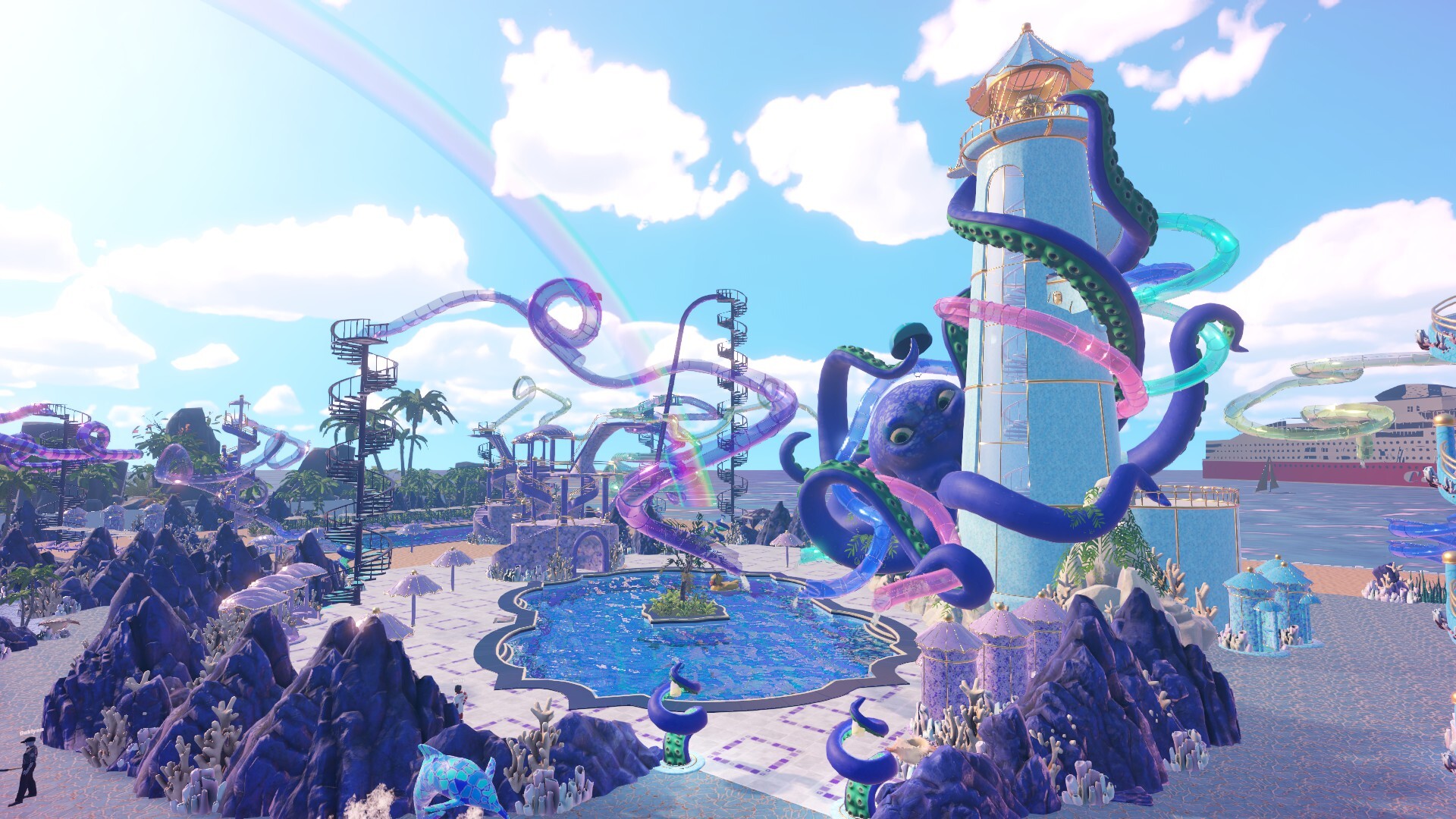
A successful waterpark eventually attracts more visitors. While this is good for revenue, large crowds can expose weaknesses in your original layout.
A park that works perfectly with a small number of visitors may become congested when attendance increases.
Identify Bottlenecks
A bottleneck occurs when one part of the park cannot handle the amount of traffic reaching it.
Common examples include:
- Narrow paths
- Popular slides
- Small service areas
- Limited attraction capacity
- Poorly positioned facilities
If one location repeatedly becomes crowded, treat it as a priority.
Increase Capacity Strategically
Instead of expanding everywhere, focus on the busiest locations.
<h3>Improve High-Traffic Areas</h3>
Widen important paths when possible and create alternative routes. Distribute attractions across the park rather than concentrating everything around the entrance.
This encourages visitors to spread out.
Plan for Peak Demand
Before opening a new major attraction, think about what will happen if it becomes extremely popular.
Ask:
- Can guests reach it easily?
- Is there enough surrounding space?
- Will nearby paths become crowded?
- Can staff maintain the area?
- Is the attraction worth its operating requirements?
<h4>Do Not Confuse High Attendance With High Efficiency</h4>
A park can have many visitors and still perform poorly if those visitors are constantly waiting, walking too far, or encountering dirty facilities.
Your goal is not simply to maximize attendance. It is to create a park where high attendance can be handled effectively.
9. How to Expand Into a Large and Efficient Waterpark
Once the core business is stable, expansion becomes your main long-term objective. However, large parks require a different mindset from beginner parks.
Instead of building one attraction at a time without a plan, create a development strategy for entire sections of the map.
Build Expansion Zones
Reserve areas for different purposes.
For example:
Adventure Zone
Focus on larger and more exciting attractions.
Family Zone
Use accessible and lower-intensity activities.
Relaxation Zone
Create pools and calmer facilities.
Service Zone
Concentrate food, utilities, and support infrastructure.
This creates a park that feels intentional rather than randomly assembled.
Upgrade Before Expanding Too Far
Expansion should happen when your current park can support it financially.
If the existing park is already struggling with maintenance or customer satisfaction, adding another section can make the problem worse.
<h3>Redesign Older Areas</h3>
Your first layout will probably not remain optimal forever.
As new mechanics become available, revisit older areas.
Consider:
- Removing inefficient structures
- Improving paths
- Moving facilities
- Expanding popular attractions
- Creating better service access
<h4>Build With the Future in Mind</h4>
Every expansion should leave room for the next one. Avoid using every square meter simply because it is available.
Space is a strategic resource.
10. How to Master the Late Game and Run a Successful Waterpark
Once your waterpark becomes large, your role changes from simply building attractions to optimizing an entire business system. At this point, small inefficiencies can become expensive because they are multiplied across a much larger operation.
The best late-game strategy is continuous improvement. Regularly examine which attractions perform well, where guests spend their time, which areas require the most maintenance, and where your money is being spent.
Create a Continuous Improvement Cycle
Use this process:
- Observe the park
- Identify a problem
- Determine the cause
- Make one improvement
- Monitor the result
- Repeat
This prevents you from making multiple changes without knowing which one actually helped.
Balance Entertainment, Operations, and Profit
A successful waterpark needs all three.
Entertainment keeps visitors interested.
Operations keep the park clean and functional.
Profit provides the money required for expansion.
If one category is ignored, the entire park can eventually suffer.
<h3>Develop a Personal Management Routine</h3>
At the start of each session, inspect the park rather than immediately building something new.
Check:
- Guest satisfaction
- Cleanliness
- Attraction performance
- Staff workload
- Available funds
- High-traffic areas
- Unused space
Then choose the single most important improvement.
<h4>Think Like a Waterpark Manager</h4>
The strongest players do not simply react to problems. They anticipate them.
If attendance is rising, prepare more capacity. If an attraction is becoming popular, consider upgrading it. If staff are struggling, reorganize responsibilities. If costs are increasing, delay unnecessary purchases.
This approach makes the later stages of Waterpark Simulator much more manageable.
Conclusion
Learning how to succeed in Waterpark Simulator is ultimately about understanding the relationship between visitors, attractions, maintenance, staff, layout, and finances. A successful park is not created by purchasing the biggest attractions as quickly as possible. It develops through careful planning and consistent improvements.
Start with a simple and expandable layout, establish an efficient flow for visitors, and keep essential facilities close to areas where they are needed. As your guest numbers increase, pay attention to bottlenecks and satisfaction rather than focusing only on revenue. Cleanliness and maintenance should remain priorities throughout the entire game because an attractive park cannot succeed if its facilities are poorly managed.
When you have enough money to expand, invest in attractions that complement your existing park instead of building randomly. Upgrade popular facilities when appropriate, create separate activity zones, and leave enough room for future development. Staff should gradually take over repetitive tasks so that you can focus on larger management decisions.
Most importantly, treat every problem as useful information. A crowded path tells you that traffic needs improvement. An unpopular attraction suggests that your park needs more variety. Repeated cleaning problems may indicate that staff coverage or layout needs to change. By observing these patterns and responding strategically, you can gradually turn a small waterpark into a large, efficient, and profitable destination.
The key to mastering Waterpark Simulator is not building faster—it is building smarter. Plan your layout, understand your guests, protect your finances, maintain your facilities, and expand only when your current operation is ready. With that approach, every new attraction becomes part of a larger strategy rather than another isolated purchase.